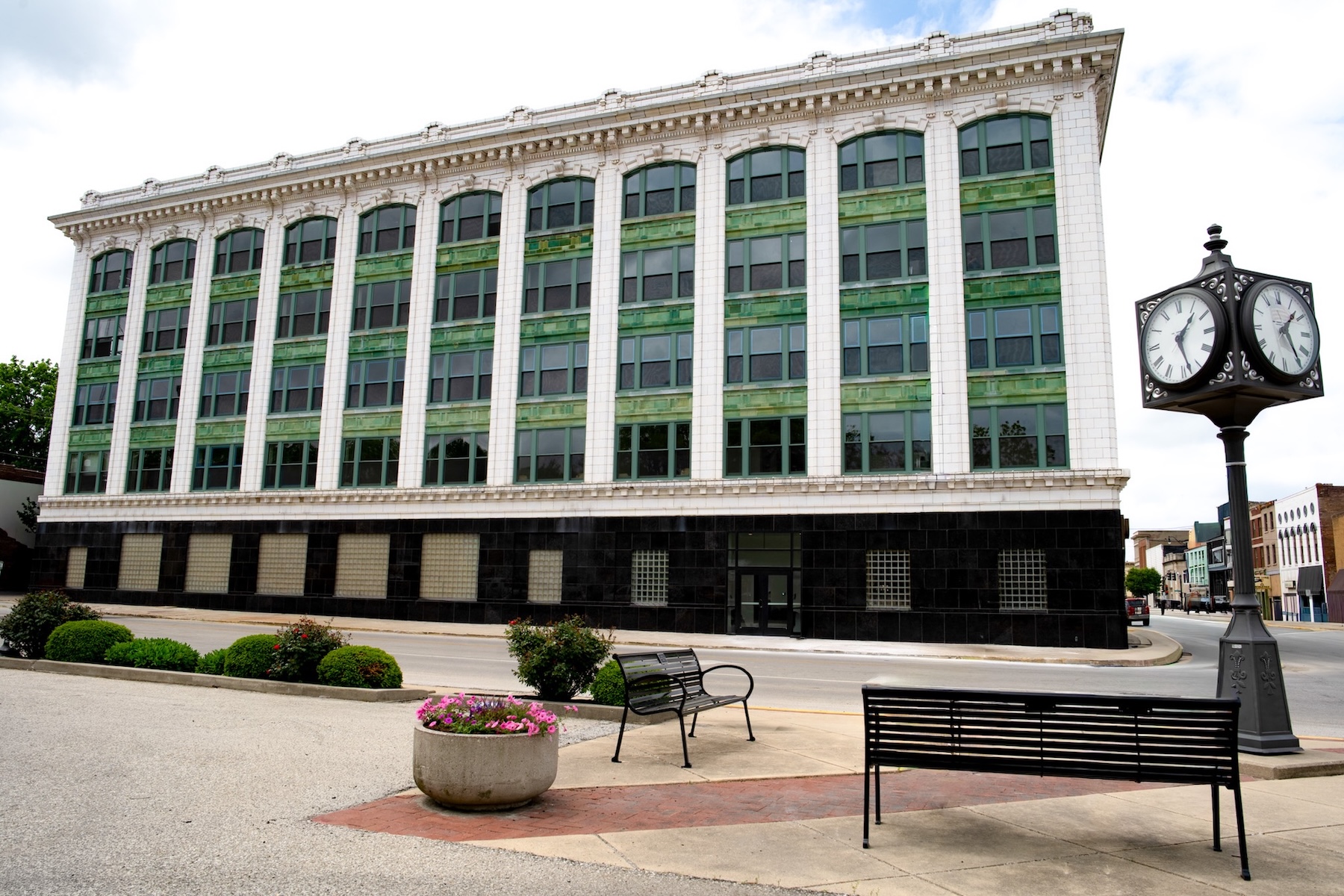
When the historic Ben Hur Building in Crawfordsville, Indiana, originally constructed in 1911, underwent a major renovation to convert the property into luxury apartments, preserving its architectural heritage was a critical project requirement. Funding for the redevelopment required that as many original building elements as possible be retained, including the existing wood doors and their distinctive decorative door hardware.
Then the unexpected happened.
A Theft That Changed the Project
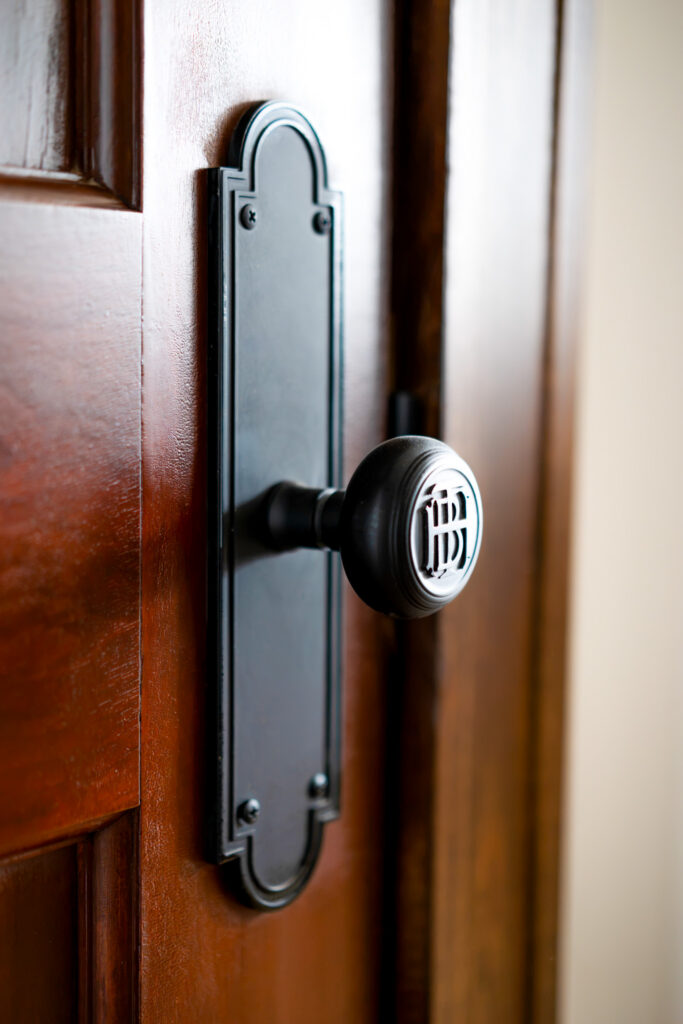
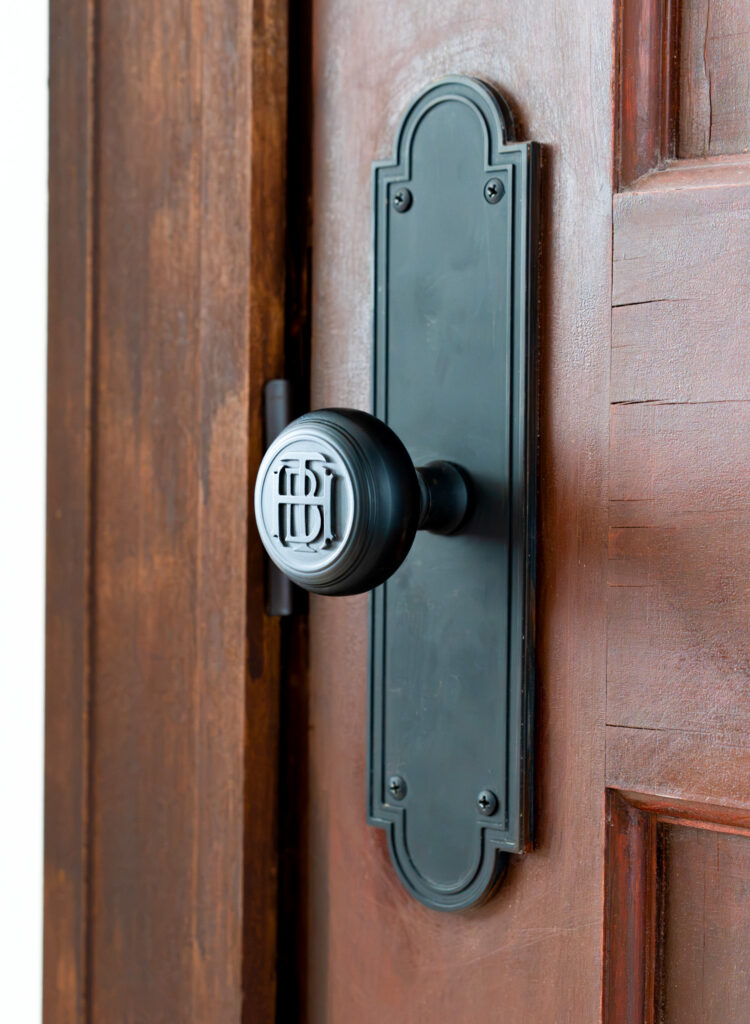
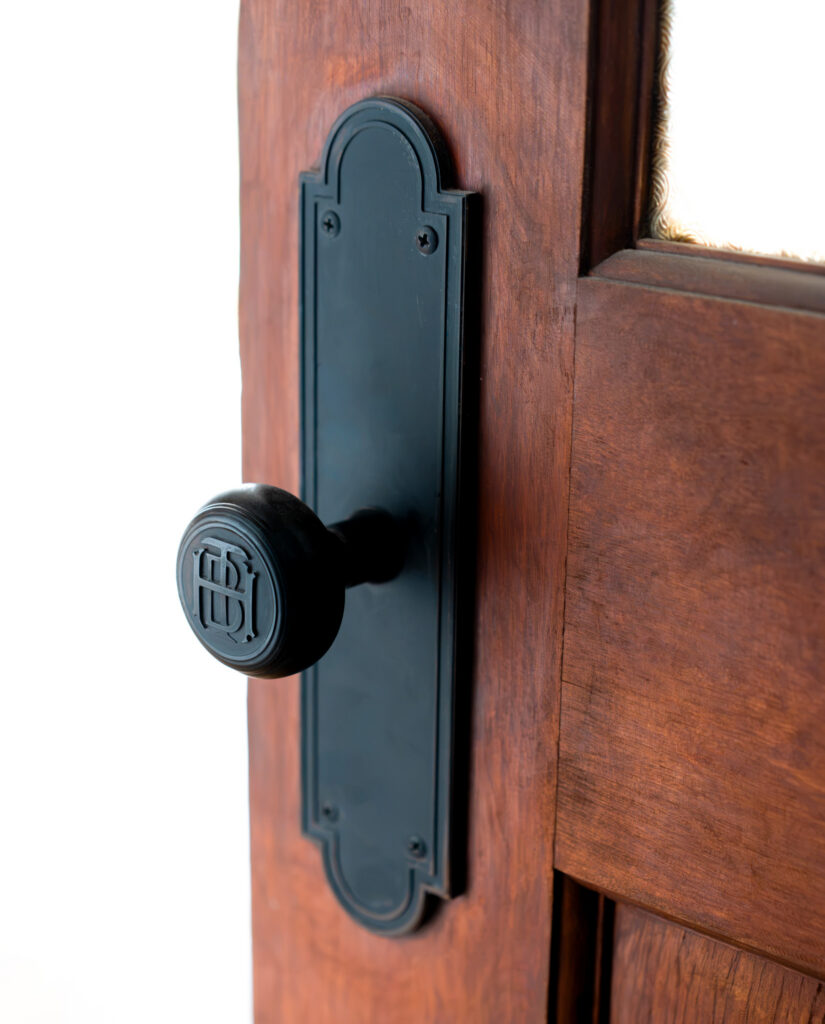
During construction, the building was broken into, and nearly all of the original decorative door hardware was stolen. The missing pieces included ornate escutcheons and custom door knobs engraved with the building’s iconic “TBH” initials. With virtually no replacement options available, the architect contacted FR International to ask what initially seemed like an impossible question. Can this hardware be recreated?
Recreating the Original Hardware
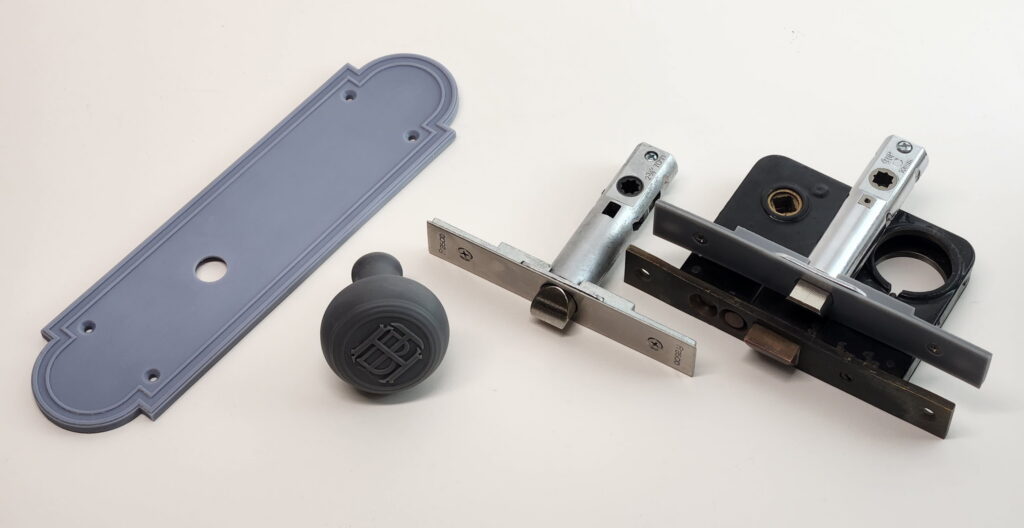
Within hours of receiving photographs, measurements, and historical details, FR International’s design team began digitally recreating the original hardware. In less than three days, a faithful reproduction had been designed and transformed into physical prototypes using rapid 3D printing.
The samples were sent to the project team for evaluation and compared against the few original pieces that had escaped the theft. Based on that review, minor refinements were made to the proportions and detailing before a second round of 3D-printed samples was produced. Within ten days of the initial phone call, the team had developed a replica that closely matched the appearance and character of the original hardware.
Just as that challenge was solved, another surfaced.
Solving a Century-Old Door Problem
Although the original doors were being reused, they had been modified decades earlier for a small-case mortise lock dating back to the 1940s. The renovation called for modern heavy-duty tubular latchsets on the apartment entry doors, but the oversized five-inch latch-edge preparation left by the old mortise lock could not be accommodated by any commercially available tubular product. Using standard hardware would have required extensive field modifications to every existing door, adding significant labor, cost, and risk to the project.
Rather than asking the contractor to modify historic doors, FR International’s engineering team designed a custom adapter and latch stabilizer specifically for the application. The solution allowed a commercial-grade tubular latch to be securely installed while completely filling the oversized latch-edge preparation. The finished installation preserved the appearance of the original doors, eliminated the need for field modifications, and significantly reduced installation time.
From Concept to Delivery in Ten Days
From the initial request to finalized prototypes, the complete design and engineering process took less than ten days, with two rounds of prototype evaluation completed during that time. Production proceeded smoothly, and the custom hardware was successfully manufactured and delivered without issue.
Preserving History, Engineered for the Future
The Ben Hur Building project demonstrates how preserving history often requires more than reproducing beautiful hardware. It requires creative engineering, rapid product development, and a willingness to solve problems that have no off-the-shelf solution. By combining modern design technology with traditional architectural craftsmanship, FR International helped restore an important piece of Indiana history while equipping the building for decades of future use.